How to Clean Suede Sneakers Without Water Stains
Suede is the easiest material to keep looking good and the easiest to ruin — the difference is entirely in method. Water and soap, the default for every other sneaker, are exactly what stains suede. The right approach is dry-first, and it takes five minutes.
The kit
- Suede brush (brass-bristle side for nap, rubber side for marks) — the one genuinely required item
- Suede eraser (a clean white pencil eraser works in a pinch)
- White vinegar and a soft cloth, for the stubborn end of the scale
- Suede protector spray, for after
Routine clean: brush only
Suede's surface is a nap of fine fibers, and most "dirt" is just dust sitting in flattened nap. Brush the dry shoe in one direction with light strokes — not back-and-forth scrubbing — and the nap lifts, the dust drops, and the color evens out. Do this weekly and suede stays looking new with no products at all. Always brush dry suede; brushing damp suede tears the fibers.
Scuffs and shiny spots
Where suede rubs (toe box edges, heel), the nap flattens and goes shiny. Rub the spot with the suede eraser using moderate pressure — the crumbs carry the mark away — then brush the nap back up. For pressed-in shiny patches, the rubber side of the brush worked in a small circle restores the texture.
Actual stains
- Dry mud: wait until fully dry (really — wet mud smears into the nap), crack it off, then brush.
- Grease: cornstarch or talc on the spot overnight, brush off in the morning. Repeat once if needed.
- Water spots and salt lines: counterintuitive but true — a cloth barely damp with white vinegar, wiped over the whole panel edge-to-edge, dries without a line. Spot-wiping is what creates rings.
If they got soaked
Don't panic and don't heat-dry. Blot with a towel, stuff with paper (not newsprint on light suede — ink transfers), and dry away from heat overnight. Once completely dry, brush the nap in one direction. Most rain-soaked suede recovers fully; the damage happens when people scrub it wet or park it on a radiator.
Protect before you need it
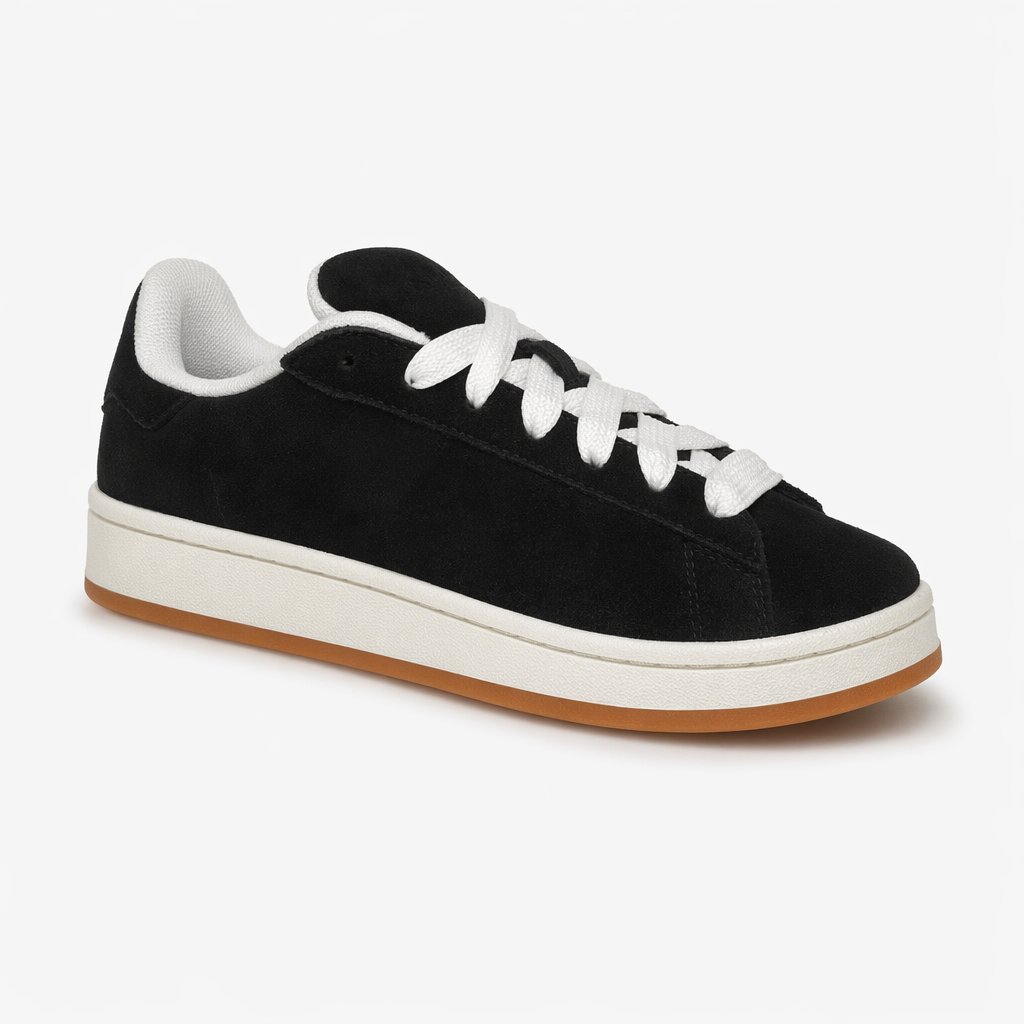
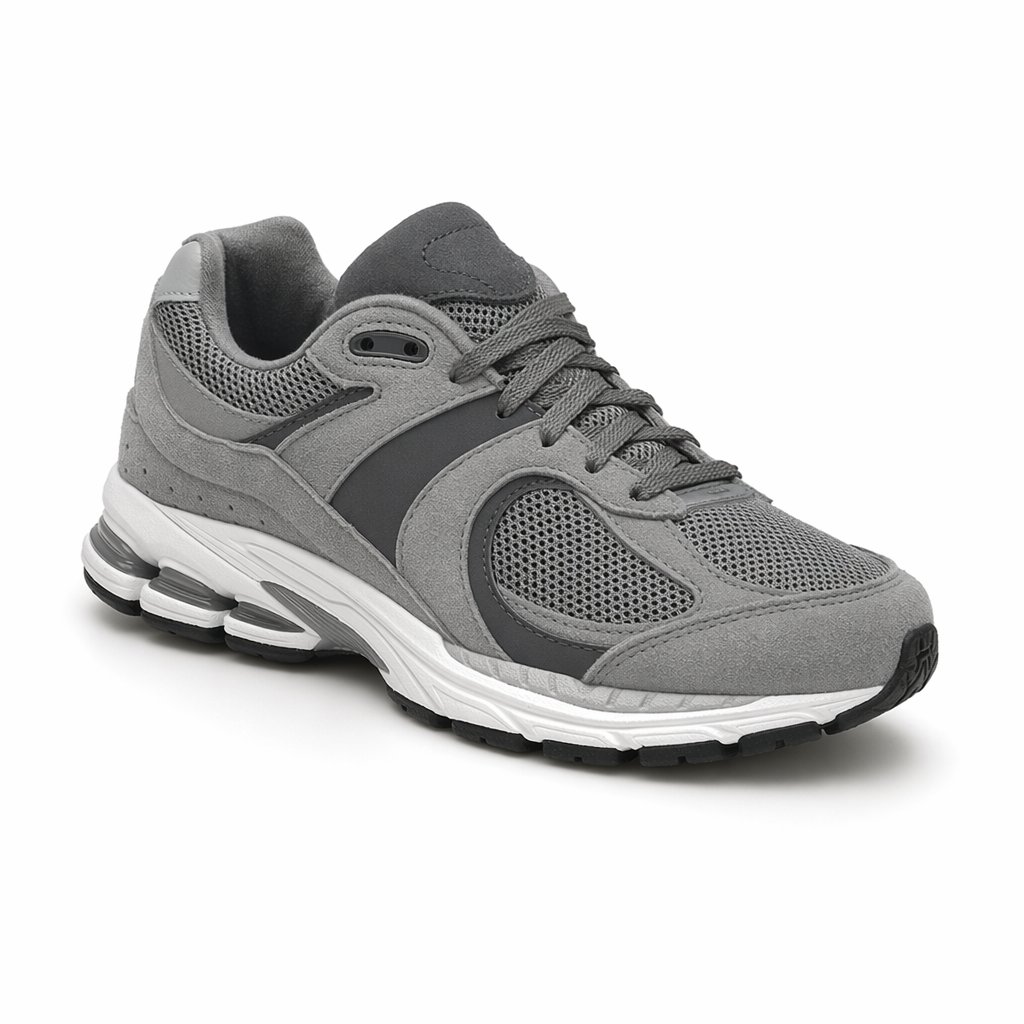
Suede protector spray is the one preventive product that earns its place: two light coats on new (or freshly cleaned) shoes make dust brush off easier and give you a window to blot spills before they soak in. Reapply every month or two of regular wear. Between that and a weekly 60-second brush, dark suede styles in particular stay effectively maintenance-free — one reason black or grey suede is the smart pick for a daily-wear pair. General material care lives in our care guide.
FAQ
Can you clean suede sneakers with water?
Avoid it. Water flattens the nap and dries with tide marks. Clean dry with a brush and eraser; use a barely-damp vinegar cloth only for stubborn stains, and wipe panel-to-seam, not spots.
How do you get scuff marks off suede?
Rub with a suede eraser, then brush the nap back up in one direction. Shiny pressed spots respond to the rubber side of a suede brush worked in small circles.
What household items clean suede?
A white pencil eraser (for marks), cornstarch (for grease), and white vinegar on a barely-damp cloth (for water and salt stains). A proper suede brush is still worth the few dollars.
Is suede hard to maintain?
No — it's a 60-second weekly brush plus protector spray a few times a year. Suede only becomes hard work after it's been cleaned the wrong way.